- Genetics Home
- Personnel
- Facilities
- Research
- Publications
Purpose:Utilizing genetics and genomics for the study and improvement of aquatic organisms.
Contact Information:
Dr. Zhanjiang (John) Liu
(334)-844-4054 (office)
(334)-844-4085 (lab)
(334)-844-9208 (fax)
zliu@acesag.auburn.edu
Staff, Students, & Scholars
The Fish Molecular Genetics & Biotechnology Lab DirectorZhanjiang (John) Liu, Ph.D.
Research Interest
Genomics, Transgenics, Marker-assisted Selection and DNA Marker Technologies.
Graduate Students Completed :
| Name | Degree(Year)/Major | Current Position |
| Putharat Baoprasertkul | Ph.D. (2006)/Fisheries | Fisheries Biologist 5, Aquatic animal Genetics Research and Development, Department of Fisheries, Ministry of Agriculture, Pathumthani, Thailand |
| Eric Peatman | M.S. (2004)/Fisheries | Ph.D. student at Auburn University |
| Micah Simmons | M.S. (2003)/Fisheries | Research Assistant at USDA ARS Aquatic Animal Health |
| Jerry Serapion | M.S. (2003)/ Fisheries | The Phillipines |
| Attila Karsi | Ph.D. (2001)/ Fisheries and CMB | Postdoc, College of Veterinary Medicine, Mississippi State University |
| Arif Kocabas | Ph.D (2003)/Fisheries and CMB | Postdoc, Cellular Reprogramming Laboratory Department of Animal Science, Michigan State University |
| Zhenlin Ju | Ph.D (2001)/Fisheries and CMB | |
| Kathryn Mickett | M.S. (2001)/Fisheries and CMB | Research Associate II, Fishery Biology, AuburnUniversity |
| Andrea Patterson | M.S. (2001)/Fisheries and CMB | Research associate, Texas Medical School at Houston |
| Soonhag Kim | Ph.D. (2000)/Fisheries and CMB | Postdoctoral fellow at West Virginia University |
| Guo Tan | M.S. (1999)/Fisheries and CMB | Research Associate at Harvard University |
| Attila Karsi | M.S. (1998)/Fisheries and CMB | Ph.D. student at Auburn University |
| Anang Kristanto | Ph.D. (2004) Fisheries | Government Fisheries Department, Indonesia |
| Sara Thacker | M.S. (2004)/Animal Science | |
| Stuart Goong | Ph.D. (2004)/Fisheries | |
| Zhuyan Guo | Ph.D. (2003)/Poultry Science | Postdoc at Tufts University |
| George Osure | M.S. (2003)/Fisheries | Researcher in Kenya |
| Joseph Padi | Ph.D. (2003)/Fisheries | Postdoc, Southern Fresh |
| Julia Pridgeon | Ph.D. (2002)/Entomology | Postdoctoral Fellow, Auburn University |
| Justin Evans | M.S. (2002)/Biological Sciences | Research Associate, Auburn University |
| Tulin Arslan | Ph.D. (2001)/Fisheries | Assistant Professor, Mugla University, Turkey |
| Phillip Waters | M.S. (2001)/Fisheries | Ph.D. student, Auburn University |
| Dave Wohlford | M.S. (2001)/Animal Science | Scientist with a breeding company |
| Wencai Yang | Ph.D. (2000)/Agronomy | Postdoctoral fellow at University of Rochester |
| Dayton Lambert | M.S. (1998)/Fisheries | Peace Corp in Africa |
| Amy Nichols | M.S. (1998)/Fisheries and CMB | Research associate at Clemson University |
| Soonhag Kim | M.S. (1996)/Fisheries | Postdoctoral fellow at West Virginia University |
| Chitmanat Chanagun | M.S. (1996)/Fisheries | Ph.D. student at University of Georgia |
| Ping Lang | Ph.D. (2004)/Horticulture | Postdoc at Auburn University |
| Zhinong Yan | Ph.D. (2000)/Plant Pathology | Postdoctoral Fellow at University of Georgia |
| Brad Argue | Ph.D. (1996)/Fisheries | Scientist at Oceanic Institute, Hawaii |
Current Graduate Students:
| Name | Department | Degree |
| Benjaporn Somridhivej | Fisheries | M.S. |
| Putharat Baoprasertkul | Fisheries | Ph.D. |
| Shaolin Wang | Fisheries | Ph.D. |
| Jason Abernathy | Fisheries | Ph.D. |
| Peng Xu | Fisheries | Ph.D. |
| Eric Peatman | Fisheries | Ph.D. |
| Qiang Xu | Entomology and Plant Pathology | Ph.D. |
| Fang Zhu | Entomology and Plant Pathology | Ph.D. |
| Atra Chaimongkol | Fisheries | Ph.D. |
| Jiarong (Rona) Liu | Horticulture | M.S. |
| Cankui Zhang | Horticulture | Ph.D. |
| Michael Trask | Fisheries | M.S. |
| John Arndt | Fisheries | M.S. |
| Catherine Nordfelt | Fisheries | Ph.D. |
| Frost Rollins | Horticulture Science | M.S. |
Undergraduate Students:
| Name | Major | University |
| Jackson Hayes | Fisheries | Auburn University |
| Jarrod Cody Young | Fisheries | Auburn University |
| Sam Pack | Fisheries | Auburn University |
| Timothy Carpenter | Fisheries | Auburn University |
| Jennifer | Fisheries | Auburn University |
| Timothy McLean | Fisheries | Auburn University |
| Abel Carrias | Fisheries | Auburn University |
| Tommy Purcell | Fisheries | Auburn University |
| Micah Simmons | Fisheries (trainee) | Auburn University |
| Trevor Silvernail | Molecular Biology | Auburn University |
| Kevin Roberg | Molecular Biology | University of Minnesota |
| Bob Iwine | Cell Biology | University of Minnesota |
Facilities & Equipment
![]() |
![]() |
The 6500 square foot Fish Molecular Genetics and Biotechnology Laboratory contains all the equipment necessary for analysis and manipulations of nucleic acids and proteins. The laboratory includes a main laboratory (radioactive safety approved), refrigerated room, walk-in freezer, dark room, tissue culture room, an attached conference room, and two attached offices.
![]() |
![]() |
The major equipment in thelaboratory include: two automated DNA sequencers equipped with sequencing, genotyping, and fingerprinting apparatus and software, one pyrosequencing equipment with pyrosequencing, genotyping software, a light-cycler system for quantitative gene expression analysis, one CCD Gel Imaging System equipped with various gel analysis modules and software, one scintillation counter, one autoclave, four PCR thermocyclers, one MicroPulser electroporator, One UV linker Microwave 2400, one microinjection system with micromanipulator controlled by a pico-injector Model PLI-100, a Bakeonizer for electroporation, a UV-visible spectrophotometer, one ice maker, a clinical centrifuge, a centrifuge, a GS-15 centrifuge, five microfuges, two computerized power supplies, 15 regular power supplies, two 37°C CO2/humidified incubators, two -80°C freezers, one -20°C freezer, one analytical balance, one 37°C shaker incubator, one 37°C incubator for dish culture, UV and visible transilluminators with camera, a Leitz microscope, two dissecting microscopes, and three biosafety cabinets, one of which is devoted as a radioactive work station. The laboratory has all the equipment for molecular biology: molecular cloning, PCR, restriction analysis, gel electrophoresis, DNA sequencing, blotting, hybridization, gene expression studies of RNA and proteins, radioimmunoassays (RIA), ELISA, and Western blotting.
![]() |
![]() |
![]() |
We have a several computers and printers for routing computing operations; both PC and Mac platforms are available. We have several DNA analysis software packages and fragment analysis software such as GelExpert, AFLP-Quantar- Pro, Gene ImageIR genotyping softwares, access to GenBank, EMBO, and other databases, and to GCG software packages. Auburn University also has excellent Genomics and Sequencing facilities with one ABI Prism 3100 capillary sequencer and various software packages, Taqman and older models of ABI automated DNA sequencers, which are available at a minimal cost.
![]() |
![]() |
![]() |
![]() |
Auburn University has the best facility in the nation for simulated commercial conditions for catfish genetic research. A large earthen pond facility consists of 78 experimental research ponds is available for evaluation of performance under closely simulated commercial conditions for QTL analysis. Fifty additional ponds are available for control fish, and other related experiments. This is important since genotype-environment interactions can occur in genetic evaluations of catfish necessitating pond experiments to obtain realistic results. An on-site hatchery and modern genetics laboratory complement the earthen ponds.
The 6500 square foot hatchery contains 300 tanks for indoor spawning, incubation and disease challenges and resistance evaluations. The hatchery is equipped with heating and cooling systems to manipulate temperature of the hatchery.
![]() |
![]() |
![]() |
Research
DNA marker technologies: The Fish Molecular Genetics and Biotechnology Laboratory at Auburn University is one of the most active labs in development and application of DNA fingerprinting technologies. We have developed markers including isozyme markers, restriction fragment length polymorphic (RFLP) markers, random amplified polymorphic DNA (RAPD) markers, amplified fragment length polymorphic (AFLP) markers, polymorphic expressed sequence tag (EST) markers, microsatellites or simple sequence repeat (SSR) markers, and single nucleotide polymorphic (SNP) markers, for applications in various fish species, especially in catfish. For catfish, we have developed over 600 RAPD markers, over 3,000 AFLP markers, over 2500 microsatellite markers, and several hundreds of SNP markers. We have thoroughly evaluated the usefulness, inheritance, and adaptability of these markers in catfish.
Development of type I markers: Recently, our laboratory has developed two ways for efficient development of type I markers. The first is the identification of microsatellite containing cDNA clones. In our brain EST work, we have identified 122 EST clones (about 10% of sequenced clones) with microsatellites. Similarly, many ESTs from the head kidney, spleen, and skin cDNA libraries also contained microsatellites although at a lower percentage. In the second approach, we have adopted a comparative EST analysis in channel catfish and blue catfish. Essentially in all ESTs analyzed, there is at least one SNP in each EST. We have identified over 100 type I SNPs. Mapping of these type I markers should set the foundation for integration of linkage maps and large scale comparative genomics.
Resource families: Although channel catfish is the major cultured catfish, the channel catfish x blue catfish hybrid system offers great advantages. The F1 hybrid is fertile and in fact we have produced F2, F3, and various backcrosses (Argue 1996, Liu et al., 1997; Dunham et al., 1998). They are a major resource for QTL mapping because of high levels of marker polymorphism and drastic difference in phenotypes. In terms of disease resistance, channel catfish is superior in resistance to columnaris disease (caused by Flavobacterium columnare), while blue catfish is superior in resistance to enteric septicemia of catfish (ESC, caused by Edwardsiella ictaluri) (Dunham et al., 1993a). ESC and columnaris are the two most severe diseases in catfish accounting for over 78% of the disease problems (NAHMS, 1997). In terms of processing yield, blue catfish is superior to channel catfish, providing 5-8% more fillet yield than channel catfish. This interspecific system, therefore, provides a model system for analysis of major QTLs involved in disease resistance and processing yield.
Genomic Organization and Composition: Channel and blue catfish both have 29 pairs of chromosomes with 1.0 X 10⁹ bp per haploid genome (LeGrande et al., 1984; Tiersch and Goudie 1993). Using AFLP analysis, we have determined that the catfish genome is highly A/T-rich (Liu et al., 1998c). In searching for satellite and minisatellite sequences, a class of A/T-rich elements known as Xba elements was characterized. The Xba elements are highly abundant accounting for 5-6% of the catfish genome (Liu et al., 1998); We also characterized several classes of Tc1-like transposable elements, of which a non-autonomous element has high copy numbers accounting for 1.6% of the catfish genome (Liu et al., 1999). Recently, we have found two classes of short intersperse elements (SINE) termed as the Mermaid and Merman elements. These two types of SINEs are specifically associated with active genes of aquatic animals and may have played major roles in shaping the aquatic genomes (Kim et al., 2000).
Genetic linkage mapping: We have mapped 563 AFLP markers and constructed the first generation genetic linkage map in catfish that include 43 linkage groups with a genomic coverage of 2,450 cM. We have genotyped over 300 microsatellite markers and linkage analysis is under way. Our work in linkage mapping represent the first genetic linkage map constructed using channel catfish x blue catfish hybrid system.
Mapping of quantitative trait loci (QTL): One of our research objectives is to determine the genes involved in various performance and production traits and map their chromosomal locations. We are very interested in genes controlling growth rate, feed conversion efficiency, disease resistance, and processing yields. To date, we have identified one marker linked to growth rate, three markers that are linked to feed conversion efficiency, and several markers that are linked to disease resistance to enteric septicemia of catfish. Genome-wide QTL scan using AFLP markers has been conducted and the data analysis is under way. Fine mapping of disease resistance QTLs are in progress.
Transcriptome analysis of catfish: Aiming at understanding the major proportion of the entire catfish transcripts (transcriptome), we have initiated large-scale analysis of expressed sequence tags (ESTs). To date, we have established 24 cDNA libraries and 4 normalized cDNA libraries. We have sequenced over 43,000 ESTs from catfish representing over 25,000 unique genes. Our goal is to sequence ESTs from all of the catfish tissues using both normalized and subtracted libraries to establish a Unigene set for functional genomics research. We have already used the existing ESTs and conducted microarray analysis to identify differentially expressed genes under biotic or abiotic stresses. In addition to catfish ESTs, we have produced 4,348 ESTs from eastern oysters (Crassostrea viginica). A total of 41,867 entries have been deposited to GenBank from our laboratory.
Expression vectors: We have isolated many fish promoters and constructed the first “all-fish” expression vectors. Our goal is to develop technology that provides approaches for safer and more efficient gene transfer. In a recent collaboration with Dr. Boaz Moav in Israel, we have constructed new generations of expression vectors with both the ability for early integration, and stable transgene expression by combining the border elements and the Sleeping Beauty transposon technologies together.
Cloning of economically important genes: We have cloned various important genes from catfish that may be useful for biotechnology including growth hormone, gonadotropin alpha subunit, gonadotropin beta subunit 1, gonadotropin beta subunit 2, proopiomelanocortin, myostatin, and many other genes that are potentially important for application in aquaculture biotechnology.
Genetic resource analysis: We are conducting research to understand the genetic variation of domestic catfish. We are also conducting research on genetic resources of catfish in the wild populations in Alabama, using AFLP technology.
Systematic Analysis of Ribosomal Proteins of Channel Catfish: We have cloned, sequenced and characterized all 79 ribosomal protein mRNAs and their expression including 47 60S ribosomal protein genes and 32 40S ribosomal protein genes. Together, with exception of the human, mouse, and rat genes, the 79 channel catfish ribosomal protein mRNAs represent the most complete set of ribosomal protein gene sequences from a single organism that should be useful for phylogenetic and comparative genomic studies.
Fish Population Genetics: There is little information on the genetic characteristics of fish in natural waters, and the inheritance of those characters. More data need to be collected and disseminated to all parties involved in fisheries science. Procedures for preservation of natural gene pools need to be developed. Strain evaluation, hybridization, polyploidy and sex-reversal in fish need to be evaluated. Also problems of genetic inbreeding should be addressed. Assessment of genetic resources will enable us to develop programs to preserve and evaluate the genetic integrity. Additionally, these problems will lead to improvement in fishing and alleviate problems associated with fishing pressure and altered habitat. Using AFLP markers, we have assessed the genetic resources of both domestic and wild catfish populations. We have also determined the genetic impact of domestic catfish on their wild populations.
The main objective of the Southeastern Cooperative Regional Project on Fish Genetics and Breeding of Fish is genetically preserve natural gene pools and/or improve cultured sport fish in cooperating states, understanding genetics of certain species such as endangered species. The long-term objectives are to preserve the genetic diversity while enhancing natural resources for fisheries as well as aquaculture. Click here to go to Southeastern Cooperative Fish Genetics pages.
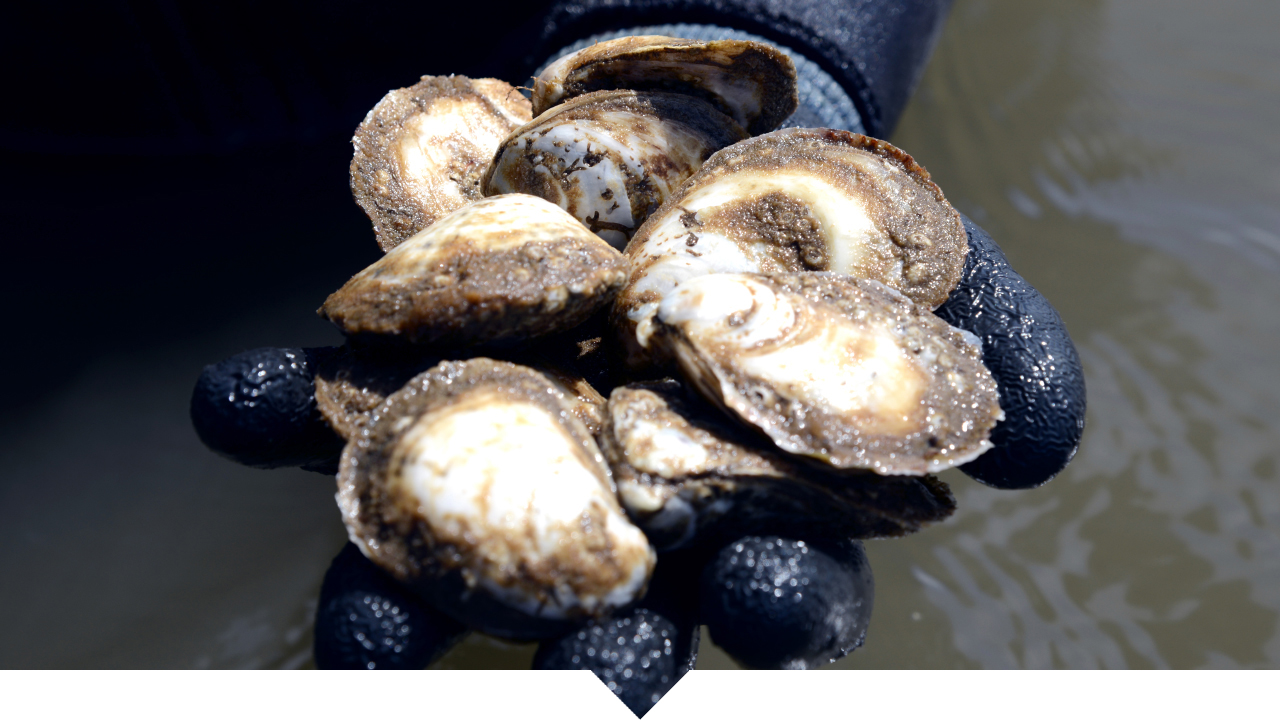
Environment Biotechnology/Environmental Genomics: We just initiated a project aimed at analysis of differentially expressed genes upon exposure of organism to adverse environment. We are particularly interested in impact of environmental pollution on gene expression. Toward this end, we choose oyster as the model organism. Oysters are found throughout coastal marine ecosystems in the United States. Our study will utilize the Eastern oyster, Crassostrea virginica. Oysters are sedentary and thus are good representations of a particular location. They are filter feeders, feeding directly on particulate organic matter and phytoplankton. They reach sizes in less than a year which are practical for analytical purposes. Oysters have a longevity of 5-7 years so that they are also effective bioindicators for a relatively long time. Since we are interested in potential impact of pollutants on reproduction, particularly sex phase switch and sex ratios, we will be using oyster gonad tissues and gill tissues to provide accurate molecular information concerning genomic expression signatures.
Application of microarray technology in aquatic systems: Our laboratory is applying microarray cDNA technology to address fundamental question concerning gene regulation with regard to development, physiology, and stress biology. We have developed microarray technology and used the technology to address physiological questions for both the normal biology and stressed biology. Our key interest is to understand genes and their expression during and after infection by pathogens. As our transcriptome analysis progresses, we will be able to produce microarray technologies for tissues, organs, and biochemical pathways. In a recent study, we have determined genes that are differentially expressed for temperature acclimation, particularly under the cold (11C).
The catfish hybrid initiative: The Department of Fisheries and Allied Aquacultures at Auburn University is lunching a research initiative attempting to resolve the problem of mass production of the channel catfish female x blue catfish male hybrid. This specific hybrid show strong heterosis and superior performance traits in disease resistance, growth, feed conversion efficiency, growth rate, processing yields, and seinability. However, due to reproduction isolation, it has been difficult to produce mass quantities to meet the demands of the catfish industry. This initiative take an institutional approach by organizing reproductive physiologists, molecular biologists, breeders, nutritionists, aquaculturists, and all other possible elements into the team to achieve the objective of resolving the problem in five to 10 years.
Genomic Composition: To understand the genomic landscape of catfish, we have identified a family of repetitive elements known as the Xba elements. The Xba elements are arranged in head-to-tail tandem arrays, is highly A/T-rich (67%), 327-331 bp in size, and is highly similar, but not identical to one another in sequence. It has high copy numbers and accounts for about 5% of the catfish genome. We have characterized multi-family of Tc1 transposable elements. One family, named Tip1, is 1.6-kb long, low copy numbers, and is similar to Tc1 elements from other teleost fish. The second family named Tip2 is 1.0-kb in size and is more similar to Tc1 elements from invertebrates. The third family named Tipnon, is 0.5-kb in size and does not harbor transposase-related coding capacity and therefore, is non-autonomous family of transposons. Tipnon has high copy numbers and accounts for approximately 1.6% of the catfish genome. We have also characterized several families of SINE elements, particularly the Mermaid and Merman elements that are specifically associated with aquatic genomes.
Physical mapping of the catfish genome: We have initiated a physical mapping project aiming at two objectives: 1. to construct the bacterial artificial chromosome (BAC) contigs using restriction fingerprinting; and 2. to assign genes into BAC using two-dimensional hybridization. The physical mapping will set the foundation for comparative mapping the catfish genome, and for eventual complete sequencing the catfish genome.
Transgenic fish research: I started my doctorate education working on transgenic northern pikes and walleye in 1985. The Minnesota Transgenic Fish Group was one of the first groups who produced transgenic fish. We have isolated many fish promoters and constructed the first “all-fish” expression vector in 1989. We have successfully produced transgenic northern pike (1988), zebrafish (1990), and catfish harboring growth hormone genes and various reporter genes. In a recent collaboration with Dr. Boaz Moav in Israel, we have constructed new generations of expression vectors with both the ability for early integration, and stable transgene expression by combining the border elements and the Sleeping Beauty transposon technologies together.
Characterization of the selenoproteome of catfish: Twenty five genes have been reported to be included in the selenoproteome of humans. Using a systematic approach, we have identified and characterized 23 selenoprotein genes from channel catfish, making channel catfish the second organism from which almost all selenoprotein genes are cloned and characterized.
Characterization of fish innate immunity system: Although many genes involved in the innate immune systems have been cloned from mammals, it is still not completely understood if fish have similar systems. In an attempt to clone, sequence, and characterize genes involved in the fish innate immunity system, we have recently characterized 26 CC chemokines and 7 CXC chemokines from catfish. Our results suggest rapid gene duplications of fish chemokines. We have also characterized a number of antimicrobial peptide genes including NK-lysin, bactericidal permeability-increasing protein (BPI), hepcidin, liver-expressed antimicrobial peptide 2 (LEAP-2). These genes may have potential for applications in genetic improvements of catfish.
126 Records Total