
Department of Entomology
& Plant Pathology
Keeping the world’s people & food supply safe from pests & disease.
In the Department of Entomology and Plant Pathology (ENPP), we are discovering safer and healthier ways to protect our food, health, resources and homes from a variety of threats, such as pests and disease. We do this while also protecting our natural ecosystems, which insects, bacteria and microorganisms are essential to maintaining. Our work promotes public health, supplies more plentiful food and builds a better quality of life for people in urban and rural areas.
In the ENPP department, we enjoy a rich tradition in teaching, research and outreach activities as part of a land-grant institution in Alabama. From hiring our first entomologist in 1896 and our first plant pathologist in 1903, the entomology and plant pathology program at Auburn has grown to its present faculty of entomologists with teaching, research and/or extension responsibilities.
“Don’t let the bedbugs bite” is easier said than done.
We focus on the “little things” — bacteria, insects, fungi and nematodes — to solve today’s biggest challenges in food and fiber production, human and animal health and the environment.
Majors
As a part of the College of Agriculture, our department offers a broad range of both basic and applied courses at the undergraduate and graduate levels, providing a sound background for students considering careers in entomology, plant pathology and related areas. The curriculum is complemented by a diversity of courses in agricultural and biological sciences offered through several departments throughout our college and university.
Minors
Our undergraduate degree includes minors in both entomology and plant pathology, each designed to compliment a variety of majors in the agricultural and biological sciences.
Graduate Degrees
Graduate degree programs in entomology emphasize basic and applied research and instruction concerning insects and other arthropods. Students are trained to use the scientific method to understand and manage these organisms. A particular emphasis is placed on species that strongly influence human food security and public health.
The Department of Entomology and Plant Pathology, therefore, offers graduate programs leading to a Master of Agriculture, Master of Science, and Doctor of Philosophy degrees. The Master of Agriculture option is a “non-thesis” option and is recommended for specific cases where a student has well-defined reasons for pursuing the degree. Each of these degree programs may be pursued in either Entomology or Plant Pathology.
Feature
Majors & Minors
Graduate Degrees & Programs
Faculty
ENPP Staff
Affiliates, Emeriti & Visiting Guests
Graduate Students
ENPP Research
ENPP Intranet
Apply Now
Help ID my Pest
Need help with insect or pest disease identifications? Please view ACES Submitting Plant Samples for Diagnosis, Analysis, and Identification.
Contact
Entomology & Plant Pathology Dept.
301 Funchess Hall
Auburn Univ, AL 36849
(334) 844-5006

Follow Us
Our Students
Graduates enjoy a broad range of career options as researchers and educators in industry, government and university settings.
Students Who Pay Attention to Detail
The Entomology and Plant Pathology Department offers many student opportunities for a deeper college experience. Please find out more below!
Student Clubs
ENPP, College & University Student Clubs
Are you ready to make some like-minded friends who aren’t pests? Student clubs and organizations are the best way! Check out ENPP’s student club and the College of Agriculture’s 20+ Clubs & Organizations.
Student Research
ENPP department helps ensure the vitality of the scientific and engineering workforce in the U.S. by recognizing students who have demonstrated their potential for significant research achievements.
Study Abroad
Entomology and plant pathology matters deal with insects and vegetation globally. The ENPP department encourages all its students to participate in study abroad programs of study.
Learn more about COA Study Abroad programs and apply!
Internships
Looking to find a job or interested in hands-on entomology experience? The college offers a range of student internships, career services and job opportunities.
EXPERTISE & RESEARCH INTERESTS
Our experts in the ENPP department cover a vast range of skills and research in areas such as: insect behavior, pest control, bug management, plant disease epidemiology, small grain disease management, plant-feeding insects, neurobiology, ecotoxicology, insecticide resistance, plant growth, plant bacteria, fungi, plant virology and health, to name a few.
Our research focus areas on insects and diseases affecting crops and animal production receives support at the Alabama Agricultural Experiment Station‘s, Regional Centers and Units, located in a diversity of habitats throughout the state. Research in tropical environments is possible through Auburn University’s faculty and student exchange agreements with universities in Costa Rica, Guatemala and Honduras.
FACULTY RESEARCH AREAS
Microbial & Arthropod Diversity, Diagnostics
- Dr. Kira Bowen (Epidememiology) – Research area in peanut disease management, including minimization of aflatoxin contamination; also disease management in small grains, corn and cotton.
- Dr. Jeff Coleman (Mycology) – Interests in host-specific virulence factors and niche colonization traits on supernumerary chromosomes in fungi.
- Dr. Nate Hardy (Arthropod Systematics, Evolution) – Evolution and systematics of plant-feeding insects, especially sap-sucking bugs.
- Dr. David Held (Urban Landscape Insects)– Chair and Professor; Ecology and management of phytophagous insects particularly those pest attacking turfgrass and ornamental plants.
- Dr. Alana Jacobson (Cryptic Species Complexes) – Research interests are in understanding the abiotic and biotic factors that drive the spatial and temporal dynamics of insect populations in relation to economically important traits and agricultural practices.
- Dr. Zachary Noel (Microbial Diversity & Communities)
- Dr. Neha Potnis (Bacterial Diversity, Microbial Communities) – Research program focuses on advancing the fundamental understanding of dynamics of host-pathogen interactions, how ecological factors shape the outcome of plant-pathogen interactions, and find ways to integrate this knowledge to better manage plant diseases.
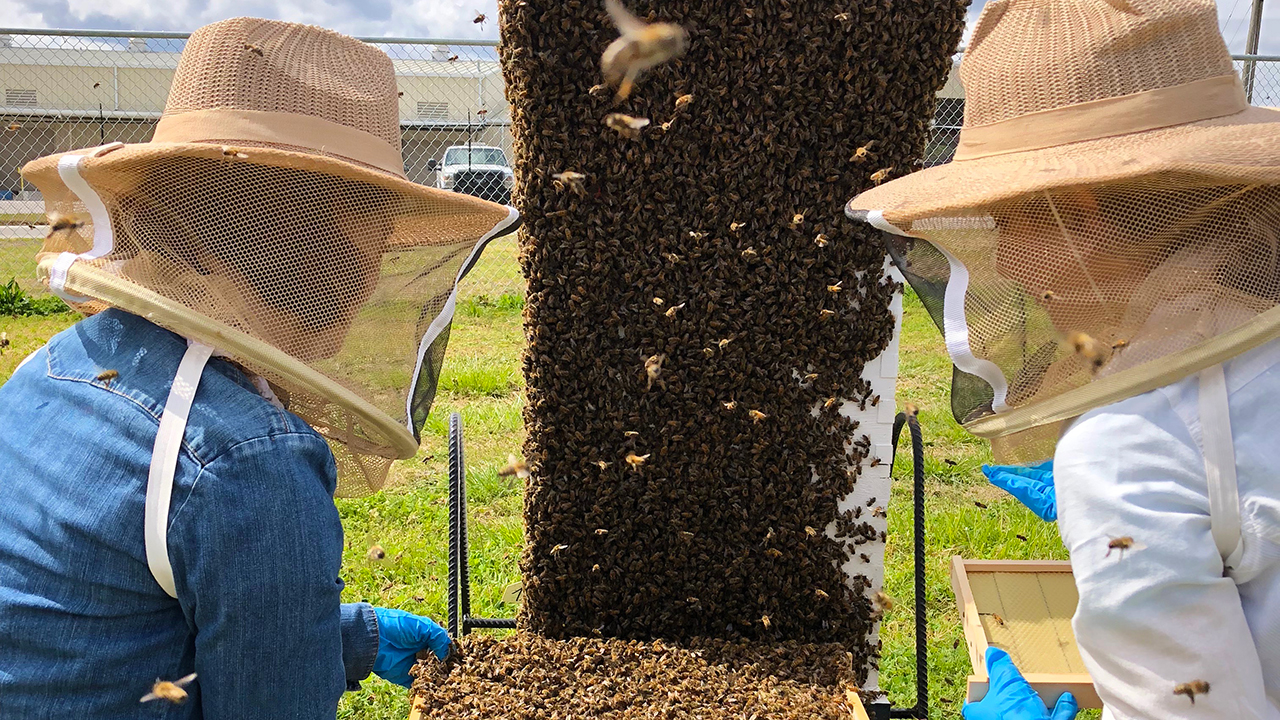
- Dr. Geoff Williams (Native Bee Diversity, Conservation) – Research directed towards understanding and improving the health of insect pollinators in Alabama and abroad, with a focus on exotic parasites and anthropogenic land-use.
Disease & Insect Management
- Dr. Arthur Appel (Termites, Cockroaches, Urban Structural IPM) – Structural pests, insect physiology and behavior.
- Dr. John Beckmann (Medical Veterinary Entomology) – Discovered the Wolbachia toxin-antidote operons responsible for mosquito insect sterility and characterized their enzymatic functions.
- Dr. Kira Bowen (Field Crops Plant Pathology) – Research area in peanut disease management, including minimization of aflatoxin contamination; also disease management in small grains, corn and cotton.
- Dr. Leonardo De La Fuente (Xylem Mobile Bacterial Pathogens) – Research lab focuses on plant pathogenic bacteria in aspects such as infection processes, host colonization, biofilm formation and molecular interactions. Questions about the biology of the pathogenic bacteria are being studied using microbiology and molecular biology techniques, as well as nanotechnology.
- Dr. Scott Graham (Field Crops Entomology)
- Dr. David Held (Insect Pests of Ornamentals & Turfgrass) – Chair and Professor; Ecology and management of phytophagous insects particularly those pest attacking turfgrass and ornamental plants.
- Dr. Xing Ping Hu (Termites, Cockroaches, Urban Structural IPM) – Applied research in developing and advancing Integrated Pest Management (IPM); exploring and evaluating efficacy of new chemicals, formulations and application methods and alternative IPM tactics. Social and invasive insects.
- Dr. Alana Jacobson (Field Crops Entomology) – The lab work encompasses everything from investigating immediate pest management problems of local, regional, national, or international scale, to advancing basic understanding of fundamental concepts in biology and related sciences, to working toward solutions for big-picture issues related to sustainable agricultural production and feeding the growing population.
- Dr. Kathy Lawrence (Field Crops Plant Pathology & Nematology) – Research expertise in plant parasitic nematodes and fungi attacking field crops, vegetables and ornamentals with emphasis on nematode and fungal pathogen interactions and host-pathogen relationships in the natural environment.
- Dr. Ayanava Majumdar (Vegetable Entomology)
- Dr. Kate Martin (Field Crops Entomology) – Research lab utilizes the tomato spotted wilt virus (TSWV) and soybean vein necrosis virus (SVNV) to understand how the pathways of a virus that infects both plants and insects are conserved or are divergent between such different host cells.
- Dr. Ed Sikora (Soybeans, Vegetables, Fruit & Nut Crop Plant Pathology) – Extension Integrated Pest Management (IPM) research in Home Garden and Commercial Production practices for soybeans, vegetables, tree fruit, small fruit and nut (pecan) crops.
- Dr. Amanda Strayer-Scherer (Peanut, Cotton, Ornamentals, Turfgrass Plant Pathology) – Research areas in integrated pest management and diagnostics of economically important diseases of cotton and peanut; conduct applied research, provide practical solutions; and crop interests including ornamentals, turfgrasses and small grains.
Applied Biotechnology
- Dr. John Beckmann (Sterile Insect Technique) – Discovered the Wolbachia toxin-antidote operons responsible for mosquito insect sterility and characterized their enzymatic functions.
- Dr. Jeff Coleman (Molecular Mycology) – Interests in host-specific virulence factors and niche colonization traits on supernumerary chromosomes in fungi.
- Dr. Sung Hwan Kang (Virology)
- Dr. Nannan Liu (Molecular Entomology) – Research studies on: The mechanisms, genes and polymorphisms involved in insecticide resistance on a genomic scale; Physiological functions of the genes and polymorphisms involved in insecticide resistance; The molecular and genetic bases of resistant gene interaction and regulation; The evolution of the expression and/or codon usage bias of resistance genes following insecticide selection.
- Dr. Zachary Noel (Endophytic Microbes)
- Dr. Sang Wook Park (Molecular Plant Pathology, Defense Signaling) – Research focuses on understanding at the molecular, biochemical and cellular levels how plants sense and equilibrate constant environmental challenges. Interests in plant hormones such as jasmonates, salicylates and their related molecules that mobilize intricate signaling networks attuning genomic, proteomic and metabolomic circuitries in disease resistance and stress acclimation.
- Dr. Neha Potnis (Omics Applications in Plant Pathology) – Research program focuses on advancing the fundamental understanding of dynamics of host-pathogen interactions, how ecological factors shape the outcome of plant-pathogen interactions, and find ways to integrate this knowledge to better manage plant diseases.
Insect Toxicology, Physiology & Chemical Ecology
- Dr. Arthur Appel (Respirometry, Physiology, Toxicology)
- Dr. Scott Graham (Toxicology, Plant Incorporated Protectants)
- Dr. David Held (Toxicology, Chemical Ecology of Urban Landscape Pests)
- Dr. Alana Jacobson (Toxicology, Resistance Management, Row Crop Pests)
- Dr. Nannan Liu (Toxicology, Physiology, Chemical Ecology)
- Dr. Ayanava Majumdar (Toxicology, Chemical Ecology of Vegetable Pests)
- Dr. Geoff Williams (Honey Bee Toxicology, Physiology)
Plant Response to Pests & Stress
- Dr. Leonardo de la Fuente (Xylem Mobile Bacterial Pathogens)
- Dr. Nate Hardy (Virulence Evolution)
- Dr. Sung Hwan Kang (Plant Virology)
- Dr. Kate Martin (Functions of Viruses within Insects & Plants)
- Dr. Sang Wook Park (Host Response to Environmental Stress)