Ten-inch Boston ferns are an important greenhouse crop, especially for growers with small operations.  Recently, several South Alabama Boston fern producers have had production problems.  These problems (necrotic foliage and reduced root mass) have been associated with high levels of soluble salts (fertilizer) in potting media.  In the summer of 1999, a greenhouse test was initiated to determine optimum fertilization practices for 10-inch hanging basket Boston fern production.  After querying several fern producers to determine their potting medium and fertilization regimes, a base potting medium of 1:1 (volume:volume) pine bark:peat moss amended with 1.5 pounds Micromax and eight pounds of dolomitic limestone per cubic yard was used.

            On June 15, 1999, four-inch Boston fern liners were planted into 10-inch baskets filled with the base potting medium amended with either 15 or 23 pounds Nutricote 18-6-8 Type 360 Day formulation per cubic yard.  Plants were grown in a double layer polyethylene greenhouse under approximately 50% shade.  Boston ferns are tropical plants so greenhouse temperatures were maintained at 50°F minimum.  Hanging basket ferns are generally produced suspended multi-layered from the greenhouse frame: however, due to the constraints of the irrigation system used in this study, plants in the AAES test were grown on raised, wire-covered benches.  Plants were irrigated using two-gallon-per-hour tube emitters (Chapin brand). 

 
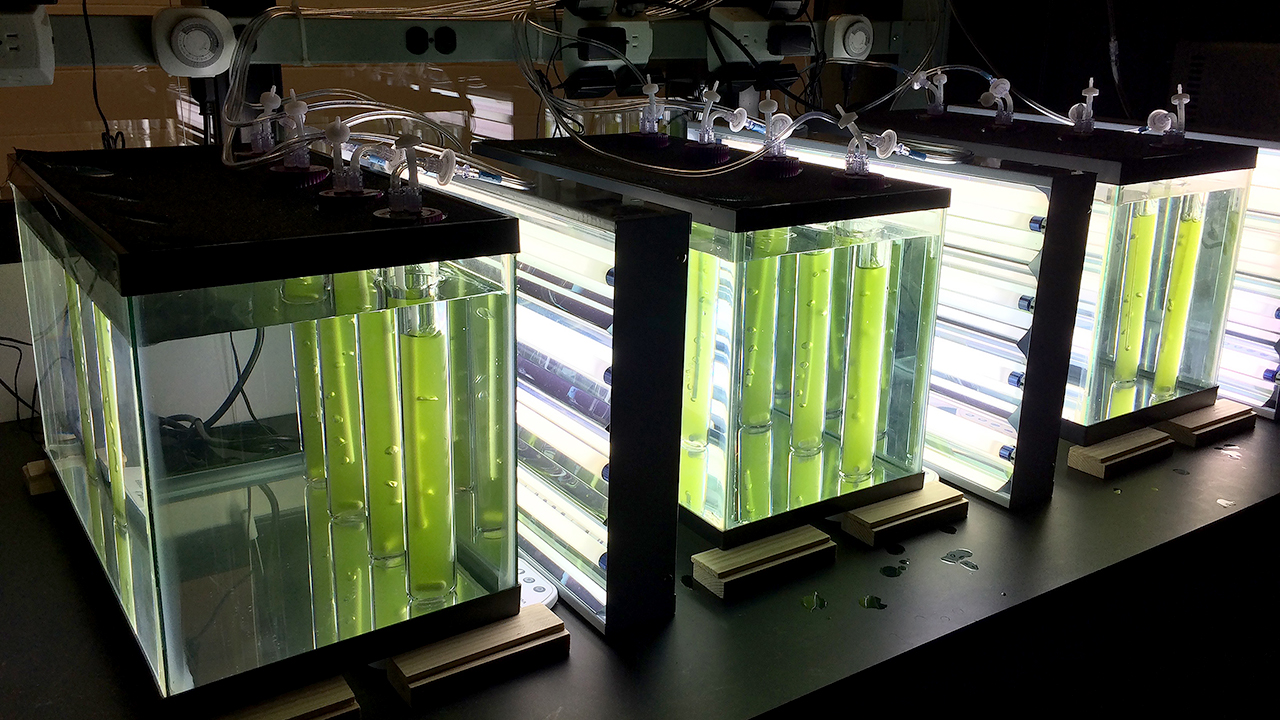
Irrigation piping for 10-inch hanging basket Boston fern fertilization study.  

         Liquid fertilizer was supplied to treatments as 0, 100, or 200 parts per million (ppm) nitrogen (N) from Peter’s General Purpose 20-10-20 soluble fertilizer.  Liquid fertilizer was supplied to the plants in one of three schemes: (1) twice weekly fertilizations throughout the trial; (2) twice weekly fertilizations only during the final four weeks of the trial; and (3) intermittent constant liquid fertilization dependent upon weekly soluble salt measurements. [Measurements of soluble salts give growers a rough idea of the fertility levels in the tested potting media. Treatments reaching soluble salt readings of 0.75, 1.5, or 2.25 mmhos, (a measure of electrical conductivity) were not fertilized the following week.]

          For those treatments receiving liquid fertilization throughout the trial, liquid fertilization was initiated on August 13, 1999.  For treatments receiving liquid fertilization for the last month of production only, applications were initiated on February 21, 2000.  The production portion of the trial was terminated on March 21, 2000, nine months after potting the liners into 10-inch baskets.

            Tested ferns were evaluated using several measurements including shoot dry weight, chlorophyll content (determined by a Minolta SPAD-502 chlorophyll meter), growth index, and foliar color rating.  These measurements provide information on the size, density, and greenness of the ferns.  The best treatments produced the largest, greenest, and densest plants.

            Ferns receiving no liquid fertilization throughout production had among the lowest measurements for shoot dry weight, foliar color rating, and chlorophyll content.  For ferns in all but one of the treatments receiving liquid fertilizer for only the final month, chlorophyll content, shoot dry weight, and foliar color rating were not greater than treatments receiving no liquid fertilization.  However, ferns receiving liquid fertilization at the 200 ppm N rate for only the final month of production plus the 23-pounds-per-cubic-yard rate of incorporated controlled release fertilizer were indistinguishable from ferns receiving liquid N throughout the study for chlorophyll content and shoot dry weight but not foliar color rating.

            Ferns receiving liquid N throughout the study had among the highest measurements for chlorophyll content, shoot dry weight, growth index, and foliar color rating, regardless of concentration of liquid fertilization, number of weeks liquid fertilization was discontinued due to soluble salt measurements, or rate of incorporated controlled released fertilizer.  Using soluble salt measurements to control the number of weeks liquid fertilization occurred produced ferns indistinguishable from the highest rated ferns for all of the measurements; at the same time liquid fertilization applications were reduced from 3 to 32% for five of the six treatments.

            The results of this trial suggest that there are a wide range of fertilization practices available to growers to maximize 10-inch hanging Boston fern production.  The grower standard in South Alabama is incorporation of 23 pounds per cubic yard Nutricote 18-6-8 Type 360 Day formulation plus twice per week liquid fertilization with 200 ppm N from a 20-10-20 or 20-20-20 soluble fertilizer throughout production.

            The study demonstrates that growers could lower their incorporated fertilizer input by at least one-third and their liquid fertilizer concentration by one-half and still produce similar, high quality plants.  Growers could further reduce their liquid fertilizer inputs by monitoring soluble salt levels and fertilizing only when low salt readings (0.75 mmhos, in this study) indicate the need for liquid fertilization.  Measurements taken on ferns in one treatment, the 23 pounds per cubic yard rate of incorporated fertilizer plus liquid fertilizer at the 200 ppm N rate for only the last month, indicated that it may be feasible to eliminate the liquid fertilization portion of the fertility plan until the last month or two of production.  Further research into liquid fertilizing for the final month or two of production is currently underway.

            Reducing the amount of fertilizer used by fern growers will not only reduce production costs but also will reduce the possibility of over fertilization problems and the potential of environmental contamination caused by the leaching of excess fertilizer from fern containers.


Hesselein is Extension Specialist at the Ornamental Horticulture Station in Mobile;  Gilliam is Professor and Department Chair and Kessler is Associate Professor of Horticulture; Edwards (deceased) was Research Scientist with the USDA National Soil Dynamics Laboratory; and Engle is retired Technician at the Ornamental Horticulture Station.

Top            Table of Contents